Gas Line Repair & Inspection in Tottenville, Staten Island
Expert natural gas piping repairs, threaded black steel replacements, gas shutoff valve installations, pressure testing, and NYC Local Law 152 building inspections.
MANDATORY SAFETY WARNING: If You Smell Natural Gas
If you detect the sulfurous, rotten-egg odor of natural gas, leave the building immediately! Do not flip any light switches on or off, do not use phones or wireless devices inside, do not unplug appliances, and never light any matches or lighters. Once you are in a safe outdoor location away from the structure, call 911 and the local gas utility hotline immediately. Do not attempt to investigate, trace, or fix gas leaks yourself.
Precision Fuel Gas Piping Services on Staten Island
Natural gas fuels heating boilers, water heaters, kitchen ranges, and clothes dryers throughout Tottenville, Charleston, and Richmond Valley. Because fuel gas operates under pressurized distribution, even minor joint deterioration or corroded threaded fittings present serious safety hazards.
Professional gas line repair Tottenville Staten Island services require strict adherence to New York City Building Code and Fuel Gas Code regulations. Whether updating deteriorating black iron pipe runs near boiler room headers, replacing obsolete brass shutoff cocks, or connecting high-BTU equipment, safety is the paramount priority.
Our mechanical plumbers perform calibrated pressure testing, gas appliance valve retrofits, and comprehensive line tracing to ensure complete peace of mind.
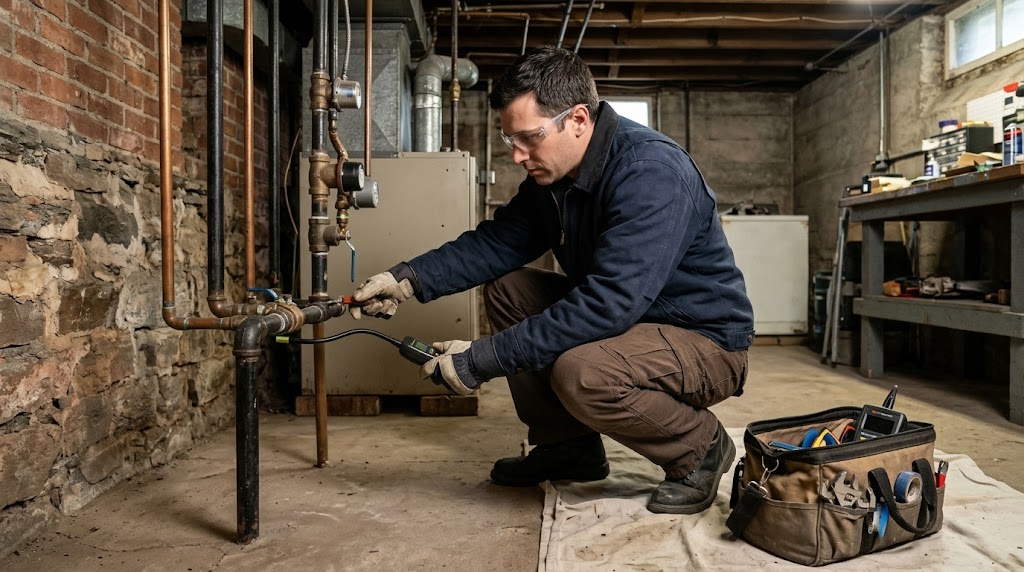
Our Gas Piping & Diagnostic Capabilities
Piping Replacement & Extension
Removing corroded or undersized black malleable iron gas lines and installing properly dimensioned Schedule 40 steel piping with approved gas-rated thread sealants.
Gas Pressure Drop Testing
Utilizing high-precision digital manometers to perform localized and whole-system pressure holding tests, confirming zero micro-leakage before gas utility meter restoration.
Dedicated Shutoff Upgrades
Replacing corroded or frozen shutoff cocks with modern CSA-approved full-port ball valves at individual boiler, water heater, and appliance branches for instant isolation.
NYC Local Law 152 Gas Piping Inspections
Under NYC Local Law 152, commercial buildings and multi-family residential properties across New York City must have their exposed fuel gas piping inspected at least once every four years by a qualified Licensed Master Plumber (LMP) or an approved inspector working under direct LMP supervision.
Single-family and two-family detached homes classified as R-3 occupancy are exempt from mandatory Local Law 152 filings, though voluntary inspection is strongly recommended for older residences along Main Street and Amboy Road. For covered multi-family properties, our team conducts thorough visual surveys, tests for gas leaks with combustible gas detectors, checks for unapproved corrugated connections, and assists building owners in submitting required DOB certification forms.
Need Gas Line Inspection or Valve Repair in Tottenville?
Contact our qualified mechanical plumbing team to discuss scheduled testing or non-emergency repairs.
Frequently Asked Questions About Gas Line Repair
Immediately evacuate everyone from the building. Do not operate light switches, flashlights, landlines, or cell phones inside the building, and do not pull electrical cords or light matches. Once safely outside and away from the building, immediately call 911 and the local gas utility emergency hotline. Do not re-enter until emergency responders declare the premises safe.
NYC Local Law 152 mandates periodic inspection of exposed gas piping systems in all buildings across New York City at least once every four years, except for buildings classified as R-3 occupancy (one- and two-family detached homes). Multi-family residential buildings and commercial properties in Tottenville must have exposed piping inspected from the point of utility entry up to individual tenant spaces by a qualified Licensed Master Plumber (LMP).
Following gas piping modification or leak repair, the system must undergo a formal pressure test using an approved test gauge and compressed air or inert nitrogen, holding required pressure without any drop over a designated duration specified by the NYC Department of Buildings fuel gas code. The utility verifies the test before restoring the gas meter.
Related Heating & Gas Services
Explore our related diagnostic services for Staten Island homeowners: